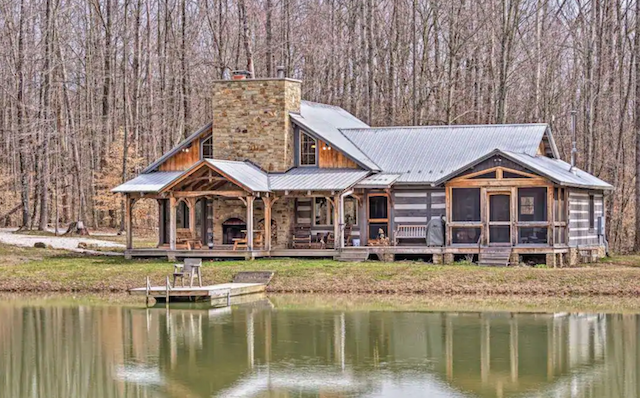
When Every Cabin Becomes a Hotel, the Hills Stop Feeling Like Home
 Skylar Lehr
Contributor
Skylar Lehr
Contributor
NASHVILLE — Brown County has a problem that does not announce itself with a single vote or a single scandal. It shows up month after month at the Board of Zoning Appeals, in legal notices for “tourist homes,” and in the quiet worry of people who bought a house in the woods and woke up next to a weekend lodge.
In unincorporated Brown County, a short-term rental is not a casual side hustle. It is a “tourist home.” That means a special exception, a public hearing, and rules that exist for a reason: 250 feet from the nearest residence and a quarter-mile from the next short-term rental. Inside Nashville, the map and the zoning district still decide whether the idea even gets a hearing. There is no automatic right to turn a house into a hotel.
Those rules keep landing on the agenda anyway. This year the board has approved new tourist homes, amended old ones, and added barns and screened porches to properties already in the rental business. Some applications are careful: eight-guest limits, local management, quiet hours, downward lighting, fire-department driveway checks. Others test how far a “cabin in the hills” can stretch before it is simply a commercial lodging site parked in a residential district.
This is the hot button. Not because tourism is bad. Tourism is the county’s economic engine. Nashville’s shops, the state park, the music venues, and the weekend cabins keep a lot of families afloat. The innkeepers tax — now 8 percent after last year’s increase from 5 percent — is paid by visitors, not by the homestead next door. Used well, that money can improve trails, parks, and the public places residents actually use.
The trouble starts when the visitor economy stops visiting and starts occupying.
A second home that is rented a few weekends a year is one thing. A ridge line converted, house by house, into a string of unsupervised party cabins is another. The hills were never designed for hotel density. Septic systems fail. Narrow roads do not like Saturday night traffic. Volunteer fire departments notice when a driveway cannot handle an engine. Neighbors notice when the porch light never goes off and the quiet they paid for is rented out by the night.
A conservative reading of this is not “shut it down.” It is “remember what the place is for.” Property rights matter. A family that owns five acres and wants to rent a well-run cabin is not the enemy.
Local government that pretends every conversion is automatically “progress” is not a friend. Brown County’s character — the thing that puts it on fall-color lists and fills the square on Saturday — is not an infinite resource. It is a finite one. Once a neighborhood becomes an inventory of listings, it is very hard to get the neighborhood back.
The county already has the tools. Special exceptions. Spacing rules. Occupancy limits. Local management requirements. Health-department septic approval. Those are not red tape invented to punish entrepreneurs. They are the difference between a tourism county and a county that sold its peace to the highest weekend bidder.
If Brown County wants to stay Brown County, the question at the next tourist-home hearing should be simple: Does this protect the hills, or does it just extract another night’s rent from them? The visitors will keep coming either way. The people who live here have to stay after the leaves fall.
Thoughts · 1