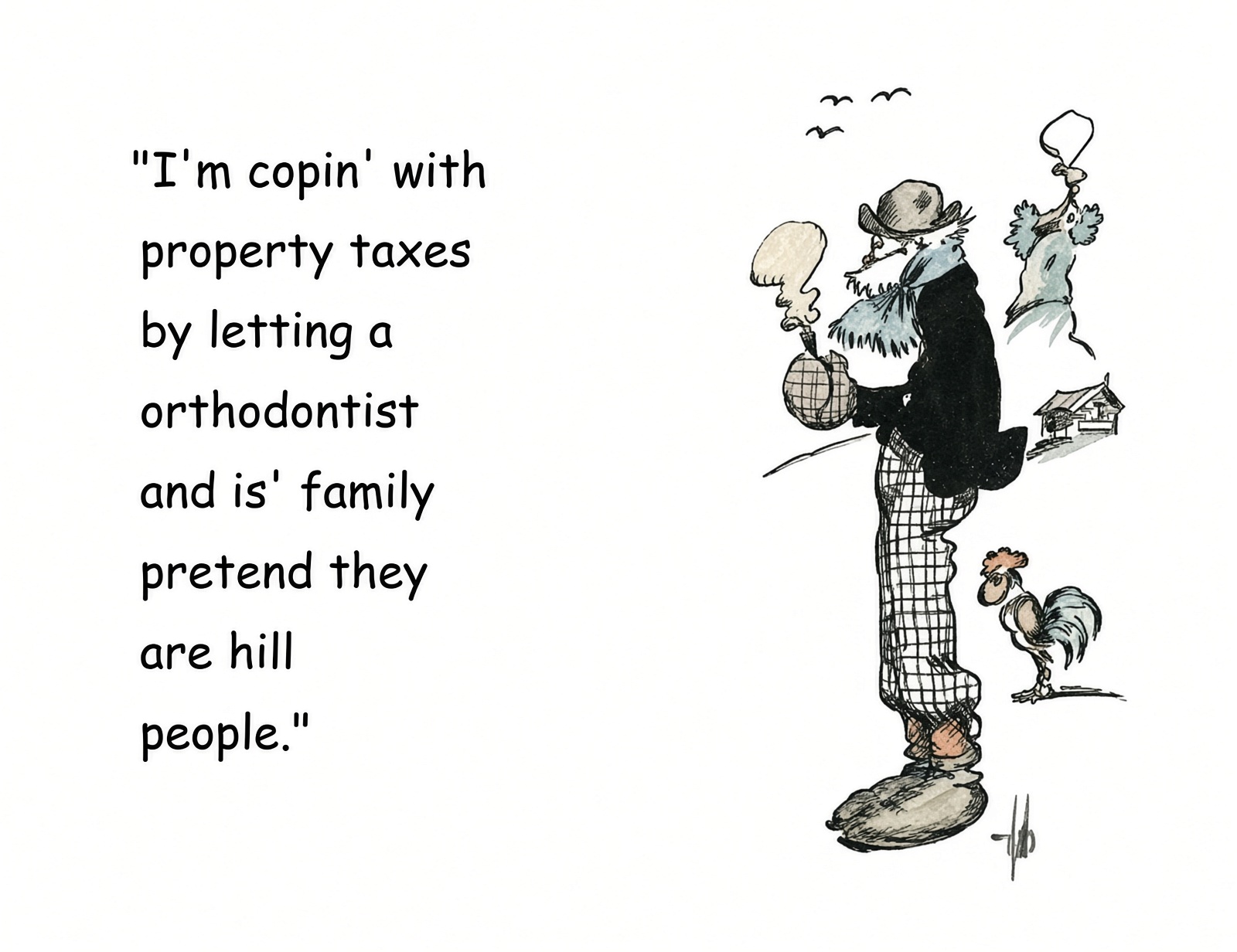

NASHVILLE — There used to be a clear idea of what Brown County was for. Artists came for the hills. Locals kept the shops and the restaurants. Visitors came for the weekend, left some money, and went home. You could still find a house that was a house, a shop run by the person behind the counter, and a quiet ridge that stayed quiet after dark.
That idea is thinner now. Short-term rentals have multiplied across the hills and into town. Some are careful local operations. Others are managed by companies that run multiple properties, market them with the same log-cabin language, and treat the county as inventory. The result is not more Brown County. It is a version of Brown County that can be booked, cleaned, and listed again by Monday.
The county already has rules. In unincorporated areas a tourist home needs a special exception, must sit at least 250 feet from the nearest residence, and must be at least a quarter-mile from another short-term rental. The Board of Zoning Appeals still hears these cases month after month. Some approvals include local managers, occupancy caps, and well-water testing. The state now treats new tourist homes as commercial for septic review, which has slowed some applications. None of that has stopped the pattern.
Walk the listings and the pattern is plain. Cabins with hot tubs, fire pits, and “minutes from downtown Nashville.” Treehouses. Modern black boxes on stilts. Older houses in town managed by professional teams. A few operators, such as Hills O’ Brown Vacation Rentals and Moondance Vacation Homes, run several properties at once. The language is interchangeable. The experience is interchangeable. What is missing is the person who lives next door year-round and has a reason to care what happens after the checkout code is sent.
Out-of-area companies and remote hosts accelerate the same thing. They do not need the local school, the volunteer fire department, or the neighbor who has to live with the Saturday night traffic. They need the weekend rate and the platform review. When a ridge fills with those listings, the ridge stops being a neighborhood. It becomes a product line. The shops on the square still open, but more of the money that once stayed with a local owner now leaves with the management fee.
This is not an argument against property rights or against a family renting a well-run cabin. A second home that is rented a few weekends a year is different from a string of unsupervised units optimized for occupancy. The difference shows up in septic systems, narrow roads, fire-department access, and the quiet that people moved here to keep. It also shows up in the housing that is no longer available for someone who wants to live here and work the shops or the park.
The innkeepers tax, now 8 percent, captures some of the visitor money. The extra 3 percent funds the new Quality of Life grants. That money can improve a park or a sidewalk. It does not replace a neighbor. It does not restore a house that was converted into a listing. It does not keep an independent shop from competing with a managed experience that looks like Brown County but is not run by anyone who has to stay after the leaves fall.
The Nashville Dream was never a marketing slogan. It was a place where the people who lived there still shaped what the place was. That is harder to do when more of the housing and more of the businesses are operated as temporary inventory by people who do not live with the result. The county can keep approving special exceptions one at a time, or it can decide that the spacing rules, the septic limits, and the requirement for a real local stake are there because the hills are finite. Once they are fully listed, they do not come back.
No thoughts yet — be the first.